

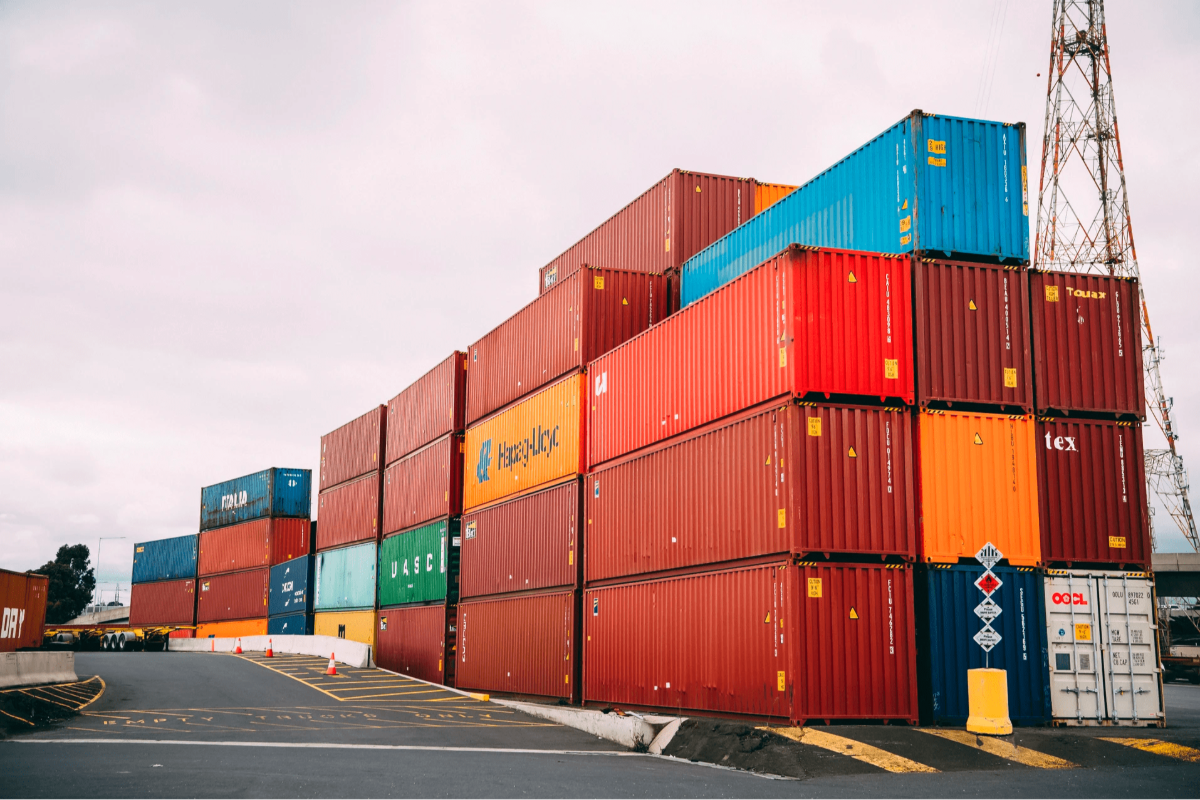
While there have been various comments regarding the container release process at Colombo Port, the customs department has informed that there is no fundamental problem in the container release process.
Traders and importers are expressing concern over the backlog of containers at the port, delays in customs inspections and inability to transport imported goods to the market on time. It is in this context that the explanation regarding container release has become important.
The cargo operations of Colombo Port are directly related to the import and export trade of the country. So the delay at the port ultimately affects business establishments and the supply of goods.
Importers are likely to incur additional costs, especially if imported foodstuffs, raw materials, machinery and other essential goods remain at port or inspection terminals for long periods of time. These costs may then have an impact on the cost of goods.
In this case, the trade sector is constantly paying attention to the actions taken by the government and the customs authorities regarding the release of containers.
In the past too when there was a container jam at the Colombo port, the customs department reported that the number of containers that could be released daily by the customs was more than the number actually released. Officials also noted that in some cases, even the released containers were not picked up immediately by the importers, resulting in a shortage of space at the port.
Continued discussion on causes of container congestion
It has already been argued that one party cannot be held solely responsible for container congestion at the Port of Colombo.
Container inspection and release activities involve not only customs officials, but also shipping agents, customs clearance agents, importers, truck owners and port terminals. A delay at any one stage may affect all subsequent activities.
There are several steps involved in sending containers for inspection, document verification, payment of duties and charges, completion of inspection, issuance of release permit and finally discharge of the container from the port.
If there is a defect in the documentation in this process or if the required party does not take timely action, the duration of container stay may increase.
Earlier published industry studies have also indicated that there are structural factors behind container release delays. Lack of space for testing, some manual procedures, lack of staff and repeated movement of containers were cited as factors affecting efficiency.
Thus, simply changing a specific action may not be sufficient to accelerate container release. There is a need to modernize the entire process from the industrial side.
In particular, measures such as increasing digital documentation procedures, improving information exchange at the port, expanding inspection facilities and strengthening coordination between various agencies are critical.
When controversies arose in the past regarding the release of containers, some quarters blamed the delay on inspection activities by customs officials. On the other hand, clarifications were given from the customs side that steps were taken to release the containers quickly and some containers were not taken by the importers even after they were released.
Amidst these differing opinions, it is important to identify, based on data, where the real bottleneck is.
Need to speed up port operations
Although the official side has given an explanation that there is no problem with container release, the problem of cargo backlog at the port cannot be completely ignored.
As Colombo Port plays a major role in Sri Lanka’s foreign trade, its performance has a direct impact on the country’s economy. If a container stays unnecessarily long at a port, storage fees, delay fees and transportation costs may increase for the importer.
Its impact may not only end with the particular company but may also reflect in the final price of goods. If port delays persist, especially in bulk imports, pressure on market supply may develop.
Thus speeding up containerization activities is not only a demand of the trade sector but also a matter related to the overall performance of the economy.
Many of the world’s major ports are currently shifting their operations to automated and data-driven systems. Tracking information such as location of containers, their inspection status, status of documents and readiness for evacuation in a single digital system will help reduce delays.
Likewise, using technology to identify high-risk cargo could increase efficiency by reducing unnecessary inspections and directing authorities’ attention to containers that actually require inspection.
It is important that the Government and Customs continue to publish clear information on the current status of container clearance. If the data like how many containers arrive daily, how many go for inspection, how many are released and how many are still pending are transparently available, the true scale of the problem can be understood.
This will also reduce confusion among importers and the public.
Overall, while the authorities have explained that there is no issue regarding container release, it is necessary to continue monitoring the delays in port operations based on the data. Container congestion can be reduced in a sustainable way only if customs, port authorities, agents and importers work together.
The infrastructure, technical facilities and administrative procedures of the port should also be upgraded to meet the increasing trade demand. Only then can faster release of containers, reduce costs for importers and ensure smooth reach of goods to the market.