

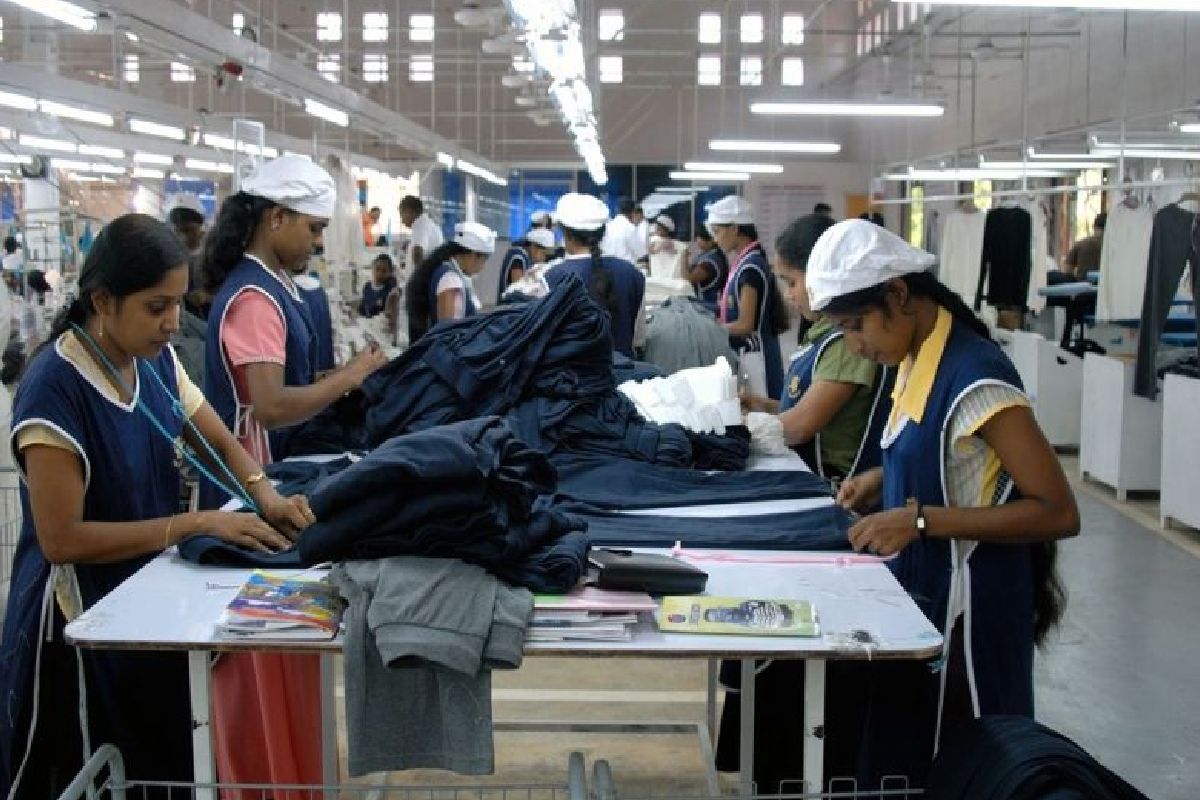
The apparel industry, one of Sri Lanka’s major sources of foreign income, is facing a challenging period this year. Garment export earnings in August 2026 fell by 7.4 percent compared to the same period last year, data based on central bank data showed.
Garment export earnings in August 2025 were US$ 469.6 million, which declined to US$ 434.8 million in August 2026. That is, about 34.8 million dollars less revenue has been recorded in a single month.
Beyond the month-on-month decline, apparel export earnings declined in the first eight months of the year. During the period from January to August, Sri Lanka earned USD 3.108 billion in garment export earnings. This amount was $3.318 billion during the same period last year. Accordingly, revenue fell by around $209.8 million in the eight-month period, a decline of 6.3 percent.
The situation in the apparel industry does not seem to be a single month issue. Weakening demand in some key markets is impacting export numbers from the start of 2026. Especially the situation in the major markets like USA, EU and UK has a direct impact on Sri Lanka’s garment exports.
Impact of reduced demand in key markets
Sri Lanka’s garment industry is highly dependent on foreign markets. So the decrease in consumer spending in the US and Europe or the decrease in purchase orders for garments affects Sri Lankan manufacturers as well.
Apparel and textile export earnings declined by 6.07 percent in the first six months of 2026. During that period, exports fell to all three major markets, the US, the EU and the UK. The fall in exports to the European Union was particularly steep.
The same trend continued in August. In addition to apparel, the total textile and apparel export sector’s revenue declined by 8.4 percent to USD 464.27 million. Exports to the US fell by 15.96 per cent and those to the UK by 11.79 per cent, according to export data. The total revenue of the textile and apparel sector also declined by 6.76 percent during the January-August period.
It has also been pointed out in industry circles that this situation is not unique to Sri Lanka. Many manufacturing countries have also been affected by the slowdown in consumer demand in the global apparel market. Changes in the European market have put pressure on garment exporting countries in particular.
However, domestic issues cannot be ignored by citing international market conditions alone. Factors such as cost of production, transportation, port facilities, supply chain and competitive pricing also determine the future of the Sri Lankan garment industry.
Buyers in the global market are now looking not only at price but also at many other aspects such as speedy delivery, quality, consistency and manufacturing practices. As a result, Sri Lankan companies have to continuously improve their competitiveness.
Market expansion is necessary to protect the industry
As garment export earnings have declined, Sri Lanka has an increased need to not only rely on its traditional markets but also seek new markets.
The US continues to be Sri Lanka’s largest single export market. But in August 2026, total merchandise exports to the US also declined by 13.43 percent. Meanwhile, Sri Lanka’s exports to India have grown significantly. Exports to India increased by 10.15 percent during the January-August period.
Such market changes also represent an important opportunity for Sri Lanka. While continuing to secure relationships with traditionally strong markets such as the US, Europe and the UK, creating additional opportunities in emerging markets such as India can help balance export earnings.
Sri Lanka has a long experience in the apparel sector and a good reputation among international buyers. So instead of treating the current decline as a permanent slump, it becomes important for the industry to adapt to market changes.
Cost reduction measures by manufacturing companies, skill development of workers, use of modern technology and production of new types of apparel are areas to be looked into. Low-cost competition can be partially overcome by focusing particularly on high-value products.
Similarly, environmentally friendly production methods will also gain importance in the future. The world’s leading apparel companies are increasingly emphasizing environmental and social responsibility in their supply chain. Sri Lankan manufacturers can take advantage of this change.
As the decline in the garment industry also affects the country’s foreign earnings, the government’s policy support also becomes important. Measures such as faster provision of facilities to exporters, simplification of port and customs procedures, and increased trade market access will help improve the industry’s competitiveness.
Current statistics clearly show that Sri Lanka’s garment export sector is going through tough times. A 7.4 percent drop was reported in August and a 6.3 percent drop in the first eight months.
But behind this situation are not only weak global demand, but also questions of domestic competitiveness. Hence the immediate focus should be on securing new orders, expanding export markets and controlling production costs.
Sri Lanka’s apparel industry has been a major contributor to the country’s economy for decades. Exporters, workers and the government must work together to overcome the current downturn and bring it back on the path of growth.