

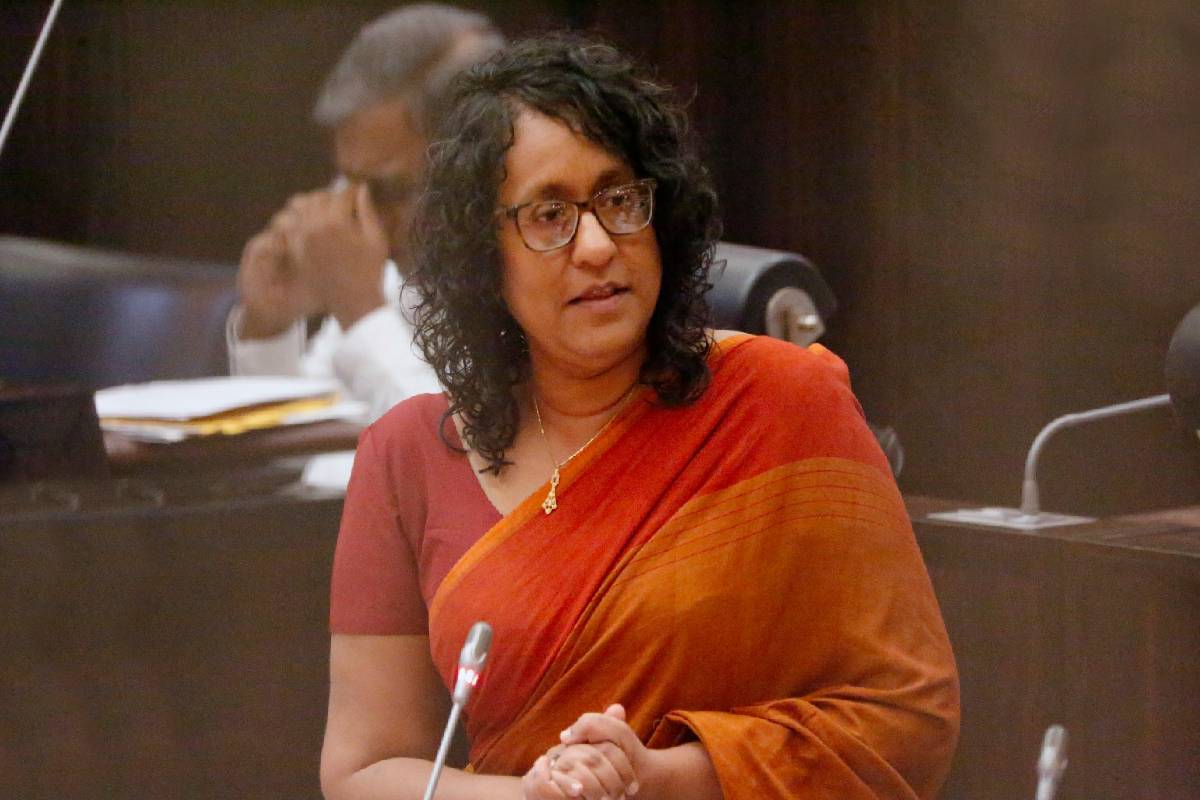
The government plans to implement three major reforms aimed at transforming Sri Lanka’s school education and higher education sector. Introducing new curriculum, expanding digital education in schools and streamlining the application process for higher education institutions are prominent among these plans.
Prime Minister and Education Minister Kalanithi Harini Amarasuriya has released information related to these changes in the Education Ministry’s advisory committee meeting held in Parliament on October 9. It is also informed that the Cabinet has approved the Education Reform Concept Paper prepared by the National Education Commission, the revised National Curriculum and the Assessment Framework for students from grades 1 to 11.
The main objective of such reforms is to make changes in the education sector to improve the learning experience of the students and help develop the skills needed for future employment. At the same time, due attention needs to be given to the challenges faced by teachers, parents and students when implementing new programs.
New Curriculum and Digital Education: The First Two Phases of Transformation
Changes to the National Curriculum are to be introduced as part of the education reforms. In addition to revising the current curriculum, a new framework for assessing the learning progress of students from grades 1 to 11 has also been approved. A new assessment system is also being developed for high-performing students.
Instead of judging the academic performance of students only by examination scores, emphasis should also be placed on their understanding, thinking skills and practical knowledge. Depending on how the new curriculum is implemented, there may also be changes in the way students learn.
However, introducing changes in the curriculum is not enough. Teachers should be given necessary training to teach new subjects. Arrangements should also be made for students in areas where schools do not have adequate learning resources to take advantage of the new system of education.
The second major plan is a five-year plan to expand digital education in schools. It is mentioned in the news that in-principle approval has been given for the project worth 96 billion rupees.
The main objective of the program is to enhance student learning using the Internet and digital technologies. Digital learning resources enable students to learn subjects in a variety of ways. Teachers may also have new opportunities to improve their teaching practices.
However, not all schools in the country have the same level of internet access, computers and necessary technical infrastructure. Therefore, it is imperative that the program is implemented in such a way that there is no disparity in digital education opportunities between urban and rural schools.
Also, guidelines have been prepared regarding cyber security of students. It is reported that the pilot project for this will be started in November and the full implementation is planned to be carried out in early 2027. Providing students and teachers with clear knowledge about safe use of the Internet is an important part of digital education.
Single Application System for Higher Education: New Scheme from 2028
The third major reform will be the introduction of an integrated system where students who complete the advanced-level examination can apply to various higher education institutions through a single website. The project is expected to be implemented from 2028 onwards, the report said.
Currently students may have to follow different procedures when applying to universities, national colleges of education and vocational training institutes. This may lead to difficulties in submitting applications, preparing required documents and keeping track of deadlines.
If the system of applying through a single website is introduced, students will be able to find and apply for the educational opportunities that suit them at one place. This is expected to reduce administrative hassles and simplify the application process for higher education.
However, for the new system to work successfully, students who do not have access to the Internet or who have limited experience in using digital technology must also be supported. Application procedures should be simple and clear. Arrangements for quick resolution of technical glitches are also essential.
In addition to this, issues like formation of National Education Council, regulation of private degree institutes, teacher recruitment and transfers, student nutrition, school health facilities and use of artificial intelligence in vocational education were also discussed in the meeting.
The original report did not provide detailed information on public opinion or reaction to these plans. However, the success of education reforms does not depend only on announcing programmes. How they are implemented, how they benefit students, and how much support teachers are given will have a real impact.
The three projects – Curriculum Transformation, Digital Education Expansion and Integrated Application System for Higher Education – have the potential to make significant changes in Sri Lanka’s education sector. It is important that equal educational opportunities, quality teaching and student safety are prioritized in their implementation.