

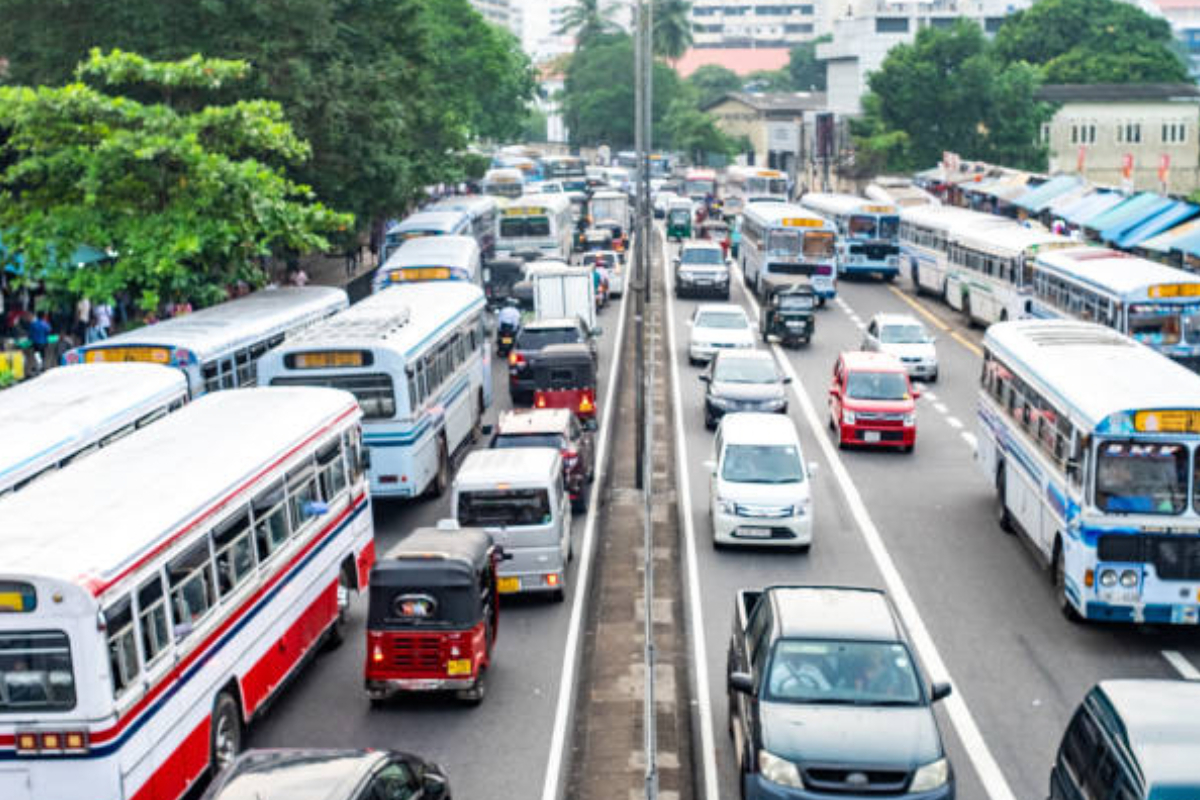
A special unit called ‘Emission Eye Unit’ has been created under the Department of Motor Transport to control vehicles that emit a lot of smoke on the roads of Sri Lanka. The main objective of this section is to monitor emissions from vehicles and take action against vehicle owners who violate the norms.
In particular, there has long been public concern about buses, lorries and other vehicles emitting black smoke. In congested urban areas, the fumes emitted by such vehicles cause discomfort to pedestrians, motorcyclists and other commuters using the road. Keeping this in mind, in addition to the regular vehicle smog tests, the authorities will carry out monitoring of vehicles on the roads.
According to a news release on October 9, the new measure is expected to further strengthen existing efforts to control vehicle emissions. Its basic objective is to identify the emissions of vehicles with evidence and hold owners accountable for not carrying out proper maintenance.
A new procedure for detecting smoke-emitting vehicles
Officers of the ‘Emission Eye’ unit will be deployed at selected locations in major cities. If excessive smoke is observed from vehicles plying on the roads, they will photograph the vehicles and collect evidence. Based on this, maintenance instructions will be issued to the concerned vehicle owners to repair the vehicle.
Owners receiving this instruction should repair the vehicle within the specified time frame and submit it to the Vehicle Smog Testing Center located at Verahera. Vehicles that fail to rectify emissions-related defects within the time frame may be blacklisted in the Motor Transport Department’s database.
Due to this, the concerned owners may face problems in getting income permit and transfer of vehicle ownership in future. Therefore, this measure is not just a warning, but is intended to force vehicle owners to maintain their vehicles properly.
The new procedure aims to strengthen the credibility of the vehicle smog testing program and on-road monitoring. Its main feature is that the emissions of vehicles are monitored not only at regular testing stations but also during daily traffic.
But detecting smoke from vehicles is not the only solution to the problem. Factors such as faulty machinery, lack of proper maintenance and malfunctions in emission control equipment should also be taken into account. Owners need clear guidance and time to repair vehicles.
Concerns and public expectations about air pollution
Vehicle emissions are considered one of Sri Lanka’s environmental and public health problems. According to information released by the Ministry of Health about two months ago, an estimated 7,000 people die prematurely in Sri Lanka every year due to air pollution-related causes. Vehicle fumes have been cited as one of the major contributing factors.
Motorcyclists and tricycle riders traveling behind vehicles emitting black smoke face more discomfort. Especially, when there is heavy traffic, such smoke spreads on the streets for a long time, causing dissatisfaction among the public.
Even though vehicle smog tests are in place, the public has on various occasions raised questions about some vehicles emitting excessive amounts of smoke on the roads. They include whether testing procedures are implemented fairly and equitably. While all these allegations cannot be said to be proven, they point to the need to increase the transparency of the examination system.
A reader comment on this post suggested that identifying smog-emitting vehicles would be faster and less expensive if the public could obtain photographs clearly showing the vehicle’s registration number.
Such public participation, if implemented, can help identify offending vehicles even in areas where officers cannot directly monitor them. However, the procedure for obtaining photos or videos, verifying their authenticity and preventing false complaints should be clear.
Likewise, it is the main expectation of the public that uniform rules should be implemented for all types of vehicles including buses and lorries, not just private vehicles. Confidence in this scheme will only increase if the law is applied equally to all.
Finally, the success of the ‘Emission Eye’ category should not be judged solely by how many vehicles are identified. Important criteria are whether damaged vehicles are properly repaired, emissions are reduced and public health is protected. This effort to improve the air quality on Sri Lanka’s roads can be effective if the authorities’ continuous monitoring and the responsibility of the vehicle owners are combined.