

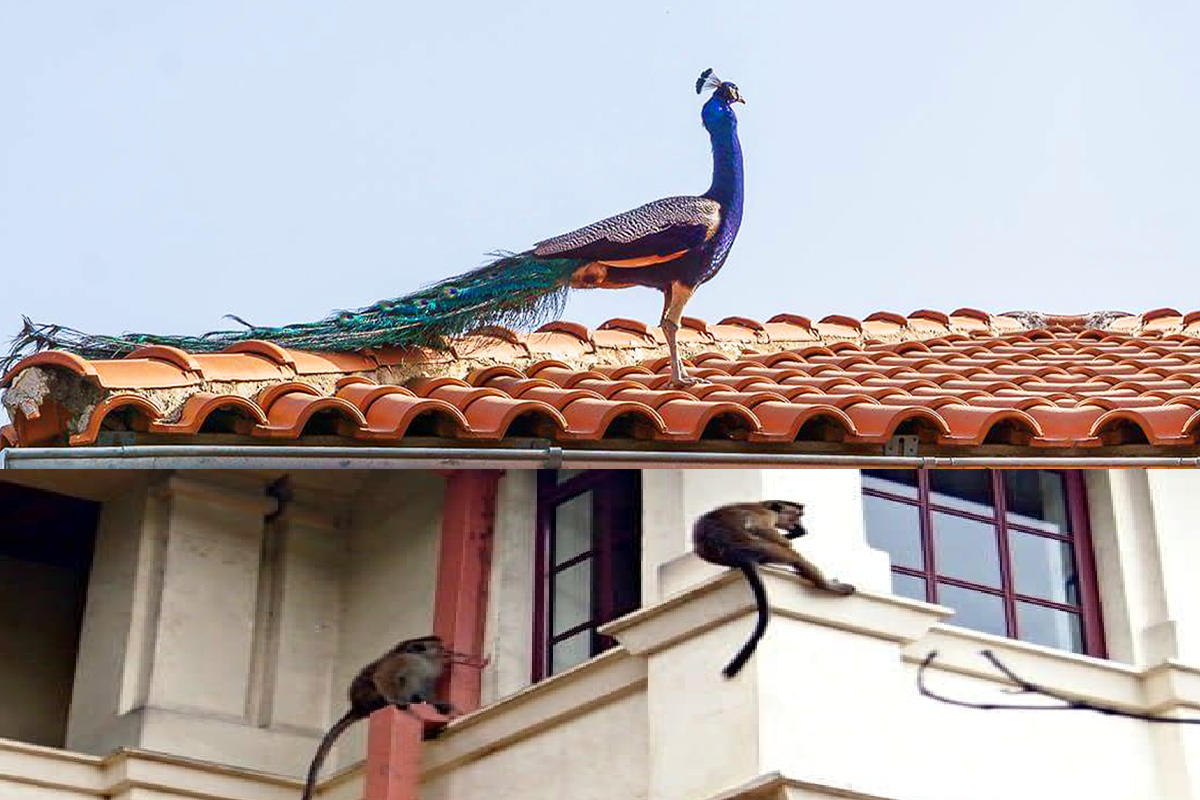
There have been reports of increasing movement of wild animals such as peacocks, monkeys and deer in several urban areas including Colombo. These animals, which were previously found in forests and natural habitats, are now being seen in human-inhabited areas as well.
According to a news release citing a wildlife department official, there are many reasons behind this change, including destruction of natural habitats, development activities, changes in the food chain.
The increase in wildlife in urban areas, including Colombo, cannot simply be seen as a change in animal numbers. It also reveals the change in the relationship between the way of life of humans and the natural environment. In particular, as cities expand, wildlife habitats shrink, forcing them to move toward human settlements in search of food and shelter.
It is also pointed out that if this situation continues, there is a risk of increasing conflicts between humans and wildlife. Therefore, it is necessary to investigate the reasons why animals come into cities and take measures to protect them and the public.
Destruction of natural habitats and changes in food chain
Destruction of natural habitats is cited as one of the main reasons for the movement of wildlife towards urban areas. In particular, the natural habitats of animals are affected by industrialization, development projects and the expansion of human settlements in Sri Lanka’s lowland wetlands.
As forests and their surrounding natural environments change, it can become difficult for animals to find the food, water and safe shelter they need. This may cause them to move out of their usual habitats and into urban and residential areas in search of food availability.
According to wildlife department officer Hasini Saratchandra, along with the destruction of natural habitats, disruptions in the natural food chain are also responsible for this situation. Also, a decrease in the number of predators of wildlife may also affect the abundance of some species.
An example of this is the increase in the number of peacocks. A decrease in the number of predators such as foxes that prey on peacock eggs may change the natural factors that control peacock reproduction. As a result, it is indicated that the number of peacocks is likely to increase in some areas.
Every living thing has a unique role in the natural environment. A change in the population of one species can affect other species as well. Therefore, understanding the movement and proliferation of wildlife requires examining not only their habitats, but also their interactions with other species in that environment.
The main aspects that need to be taken into account again and again in this matter are conservation of natural habitats, reduction of impacts caused by development activities and maintaining the balance of the food chain. Long-term solutions to prevent wildlife migration to urban areas must be developed with these fundamentals in mind.
The need to avoid human-wildlife conflicts
As wildlife moves into populated areas, direct interactions between humans and animals may increase. This can lead to challenges related to public safety, animal welfare and management of the urban environment.
When animals like peacocks, monkeys and deer are seen near settlements, the important question is how to deal with them. Harassing the animals or trying to capture and relocate them yourself can further complicate the problem. Therefore, in such situations it is necessary to follow the guidance of the concerned wildlife authorities.
According to the Department of Wildlife, immediate action can be taken in cases where animals are behaving dangerously or threatening to attack. It has been informed that steps will be taken to deal with such situations through the regional wildlife offices of Colombo, Gampaha, Muthurajawela and Atitiya.
Thus, it becomes important for the public to inform the concerned authorities when wildlife related issues arise and not handle them themselves. At the same time, the root causes of wildlife encroachment into human settlements should also be investigated and addressed.
Striking a balance between urban development and nature conservation can be a long-term approach to this problem. Activities such as conservation of natural habitats, monitoring of animal movements and quick response to dangerous situations are gaining importance.
Overall, the increasing presence of peacocks, monkeys and deer in Sri Lanka’s urban areas is an important issue related to changes in the natural environment. Solutions should not be limited to removing animals from cities, but should aim to protect their habitats and reduce human-wildlife conflicts.