

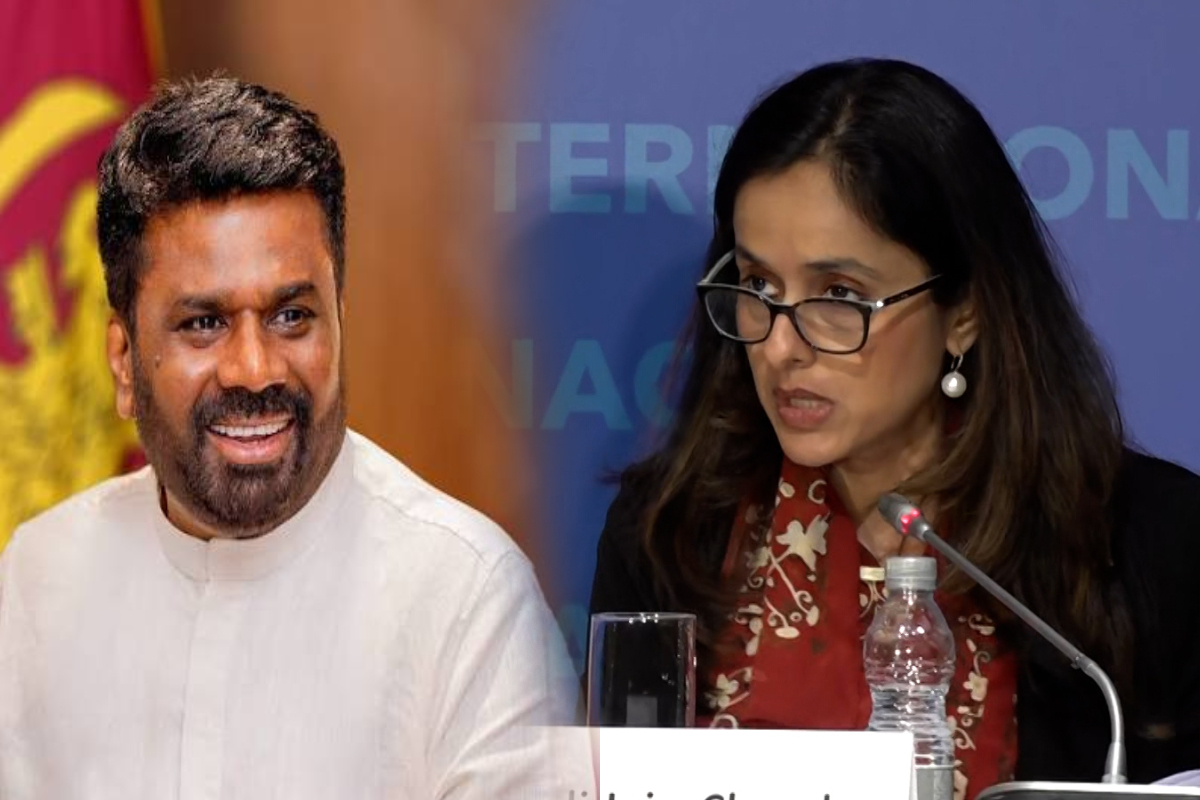
Senali Jain-Chandra, Deputy Director of the International Monetary Fund’s Asia and Pacific Department, has said that there have been significant improvements in Sri Lanka’s economic situation. She also mentioned that she is ready to support Sri Lanka in future as well.
According to information released on October 15, 2026, she made these comments at a press conference held during the meetings of the International Monetary Fund in Bangkok, Thailand.
Sri Lanka has been taking various measures to recover from the economic crisis it has faced in the last few years. Changes in areas such as foreign exchange reserves, government revenue, debt restructuring and economic governance have become prominent in this recovery journey.
In this case, the improvement in Sri Lanka’s current economic situation has also been revealed in the assessment of the International Monetary Fund. However, how these developments are reflected in the daily lives of the public has also attracted much attention.
Progress in debt restructuring and economic reforms
According to Senali Jain-Chandra, Sri Lanka’s macro economic situation has improved significantly. The country’s fiscal performance has strengthened and debt restructuring measures are largely nearing completion.
She also pointed out that there have been important developments in the areas of good governance and infrastructure. Such reforms are associated with increasing transparency in economic governance, proper management of government finances and building long-term financial stability.
An official-level agreement was reached earlier this month between Sri Lankan officials and representatives of the Fund regarding the seventh review under the IMF’s Extended Financial Facility program.
Through this agreement, Sri Lanka has the opportunity to receive about 345 million US dollars. However, receipt of this funding requires consideration and final approval by the Executive Committee of the International Monetary Fund.
The agreement is expected to be considered by the board of directors in the coming weeks. After this, if the necessary procedures are completed, Sri Lanka may get the next round of financial assistance.
The current IMF plan is set to expire in March 2027. It is also reported that another review team will visit Sri Lanka before that.
Achieving economic targets, strengthening the government’s fiscal management and maintaining debt sustainability will be key challenges for Sri Lanka during this period.
Funding from the International Monetary Fund can partially support the country’s external financing needs. But the availability of that finance alone is not a complete solution to economic problems. Actions such as developing manufacturing sectors, increasing exports, attracting new investments and creating employment are also necessary.
IMF ready to help Sri Lanka in the future: What are people’s expectations?
Chenali Jain-Chandra said that the International Monetary Fund is ready to continue working with the Sri Lankan authorities even after the current agreement is concluded.
Support can also be provided through new funding arrangements, monitoring activities and policy advice aimed at capacity building, she explained.
This is seen as an opportunity to continue to improve Sri Lanka’s economic policies. However, further clarity is needed regarding the type of financial arrangement that will be implemented in the future.
With this announcement, an important question among the public regarding the economic recovery is when the country’s economic progress will be evident in the cost of living.
Prices of essential commodities, electricity and fuel costs, transport charges, tax burden and household income directly affect people’s economic experience. Even if economic indicators improve nationally, people will not fully realize the benefits of that improvement if household spending continues to rise.
Various opinions are also expressed regarding the IMF’s plan. One side feels that international support is necessary to restore economic stability. At the same time, another party insists that strict fiscal restrictions should not burden the public and social welfare should be protected along with economic reforms.
These are commonly discussed concepts; Comments made by readers under a particular message should not be considered. However, the success of the economic recovery does not depend only on receiving credit assistance and receiving praise from international organizations. Increasing people’s incomes, increasing employment and improving their ability to cope with living expenses are also important criteria.
The announcement that the International Monetary Fund is ready to continue supporting Sri Lanka has taken center stage in the debate over the country’s economic future. Along with the availability of further financial assistance, how the economic reforms are implemented also needs to be observed.
Whether Sri Lanka can use this opportunity to create long-term economic sustainability and how its benefits will manifest in public life will depend on the government’s actions and economic decisions in the coming months.