

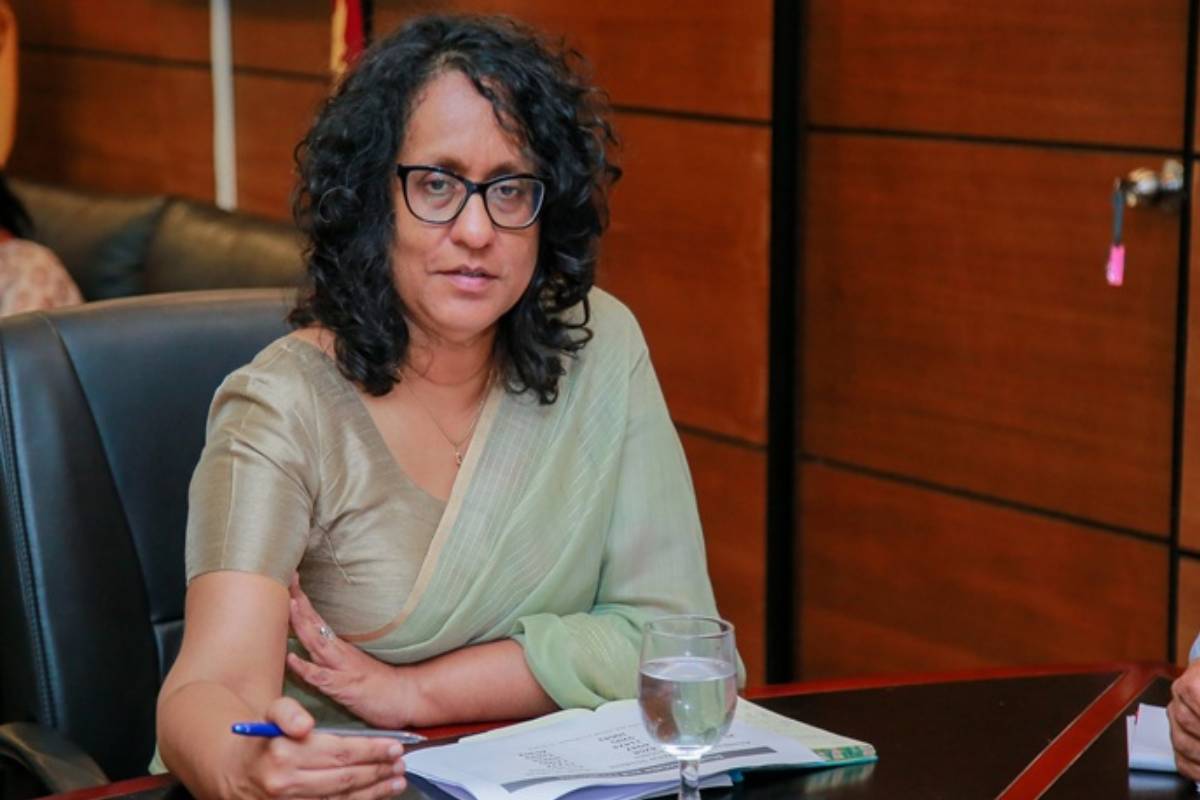
Prime Minister Harini Amarasuriya has said that destroying the country’s natural resources in the name of economic development will not lead to real development. He also emphasized that there should be a proper balance between the development of the country and environmental protection.
The Prime Minister made these comments while addressing the Third International Conference on “Plastics, Innovation and Environmental Sustainability” organized by the Open University of Sri Lanka in Colombo.
At present, various measures are being taken in the country regarding environmental protection. Special emphasis is given to issues such as proper disposal of waste, reduction of plastic use, promotion of recycling and inculcating environmental responsibility among the public.
As part of this, the Prime Minister said that the government plans to implement several programs under the Clean Sri Lanka National Programme.
Important among them is the “Bividuru Puravara” National Waste Management Project. The Prime Minister has said that the project is planned to be implemented in the period from 2027 to 2029 at a cost of around 34 billion rupees.
34 billion rupees waste management project
The main objective of the “Bividuru Puravara” project is to further streamline the waste management system in the country. In addition to reducing the dumping of non-biodegradable waste, including plastic, into the environment, it is also planned to expand waste reuse practices.
In Sri Lanka there are problems related to proper disposal of waste not only in cities but also in rural areas. Unsegregated dumping of waste generated from houses, commercial establishments, factories and public places leads to various environmental problems.
Plastic waste is a major problem in this. As single-use plastics increasingly end up in the environment, they remain non-biodegradable for a long time. As a result, land, water bodies and marine areas are also vulnerable.
This requires not only collection of waste, but also methods of segregation and management at an early stage. The Prime Minister said that practices such as separate collection of recyclable materials, promotion of reusable materials and composting from bio-waste will be expanded.
Programs related to waste management should not be undertaken by the government alone. Public cooperation is also important in this. Even small actions like separating waste at home can make a big difference.
Greater emphasis on environmental education in schools
The Prime Minister pointed out that it is not enough to make laws to protect the environment. He also believes that students should be inculcated with environmental responsibility from an early age.
For this, it has been reported that through new educational reforms, steps are being taken to practically integrate concepts related to environmental education, waste management and circular economy in school education.
Actions will also be taken to promote the concept of “green school” in schools. Through this, students will have the opportunity to not only read about environmental protection in books, but also implement it in their daily lives.
Habits such as not littering, reusing reusable materials, reducing plastic use, protecting trees and keeping school premises clean should be inculcated at an early age.
A part of this initiative is to inculcate the concept of “Zero Waste” among the students. Its basic objective is to reduce the generation and use of unnecessary materials and to inculcate the habit of reusing the generated waste as much as possible.
As environmental protection is directly related to the future generation, creating awareness through educational institutions can have a long-term impact.
A cleaner environment for future generations
The Prime Minister has reiterated the idea that environmental protection should occupy an important place in the country’s development plans.
As economic activity expands, pressure on natural resources may also increase. With industrial growth, urbanization, construction activities and increase in consumption, the volume of waste is likely to increase. Therefore, there is a need to consider environmental impacts while making development plans.
Accumulation of plastic waste, especially in seas and coastal areas, can also affect marine life. There is also a chance that wastes that are not properly disposed of on land can reach the ocean through rainwater and rivers. Thus, waste management is seen not only as an issue related to the cleanliness of cities, but also as an issue related to the country’s water resources and marine environment.
In this context, the National Waste Management Plan to be implemented during the period 2027 to 2029 is getting attention. The Rs 34 billion project aims to curb plastic and other non-biodegradable waste and expand activities such as recycling and composting.
But the actions of government agencies alone are not enough to make a national project a success. There is a need for the public, schools, businesses, local government bodies and the private sector to work together.
Protecting the environment should not be seen as a task to be done in the future, but should become a part of life today. Be it home, school, office or any public place, when the habit of proper waste management is developed, the impact is far reaching.
The Prime Minister’s main idea is to create a clean and green environment without leaving polluted land and oceans affected by plastic waste to future generations.