

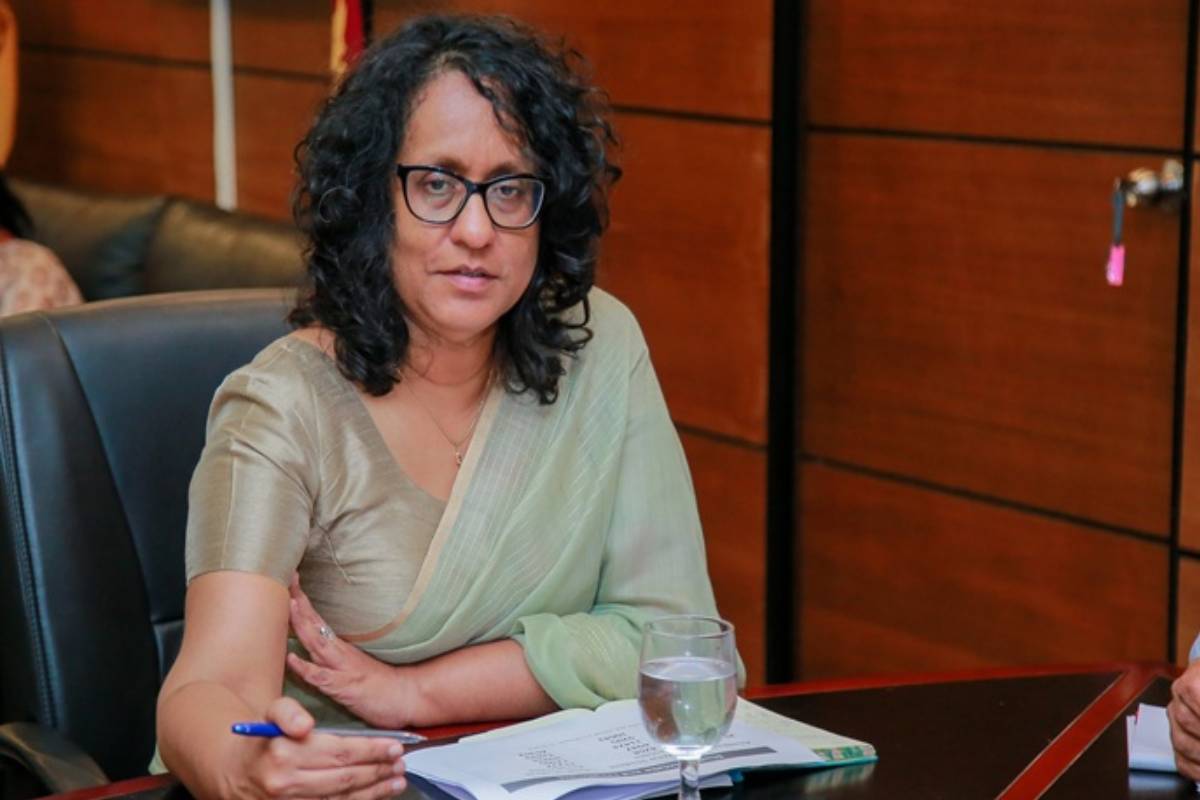
Prime Minister Harini Amarasuriya has said that destruction of natural resources in the name of economic development cannot be considered as real development. He also pointed out that environmental protection should be given equal importance in the development path of the country.
The Prime Minister made these remarks while addressing an international conference on “Plastics, Innovation and Environmental Sustainability” held in Colombo. Organized by the Open University of Sri Lanka, the conference focused on various issues related to the country’s environmental future.
In this context, the Prime Minister emphasized that environmental protection is not a matter that should be limited to one department of the government, but a responsibility that requires the public, educational institutions and communities to work together.
He also said that under the government’s “Clean Sri Lanka” national programme, various activities are being carried out highlighting environmental protection and waste management.
New program on waste management from 2027
The next step is to implement the national waste management plan “Bividuru Puravara” during the period from 2027 to 2029. The Prime Minister said that about 34 billion rupees will be allocated for this purpose.
One of the main objectives of this scheme is proper management of waste generated in the country. Actions are being taken to reduce the uncontrolled accumulation of non-biodegradable wastes in the environment, especially plastics.
Waste disposal has been a long-standing problem in many parts of Sri Lanka. When wastes from homes, commercial establishments and industries are dumped in one place without proper segregation, they can harm the land, water and environment.
Thus it becomes important not only to eliminate waste but also to reduce the amount of waste generated. Activities such as separate collection of recyclable materials, promoting the use of reusable materials and composting from bio-waste will also be emphasized under the scheme.
A key part of these efforts could be to make waste management not just the responsibility of a municipality or local authority, but a practice that starts with every household.
Importance of environmental education at school level
The Prime Minister said that it is not enough to make laws to protect the environment, but also to create a sense of environmental responsibility among the people.
For this, he mentioned that through new educational reforms, steps are being taken to practically incorporate concepts like environmental education, waste management and circular economy in school education.
Teaching children environmentally friendly habits from a young age can also change society’s attitude in the future. As a part of this, it is planned to promote the concept of “green school” in schools.
Activities will be undertaken to teach students practices such as not creating unnecessary waste, reusing used materials, separate collection of recyclables and composting food waste.
This will not only stop within the school campus, but also create an opportunity for students to carry these habits into their homes and communities.
At the same time, the Prime Minister said that the government’s aim is to create a clean and green environment without leaving polluted land and sea affected by plastic waste for the future generations.
When these projects related to environmental protection are implemented, their success depends not only on the government’s actions but also on public participation. Even small changes in everyday life, from reducing waste to responsible use of natural resources, can have a significant impact in the long run.
Thus, these new projects are seen as an attempt to strike a balance between economic development and conservation of natural resources, considering environmental protection as part of future development.