

Information about the state of poverty in Sri Lanka has received a lot of attention in social media and political circles. In particular, the news that the country’s poverty level has reached 65 percent has shocked the public. But it is necessary to understand separately what this figure of 65 percent is based on and whether it really represents the overall poverty rate of the country.
In the World Bank’s projections for 2026, Sri Lanka’s poverty rate is projected to be 65.4 percent in 2026, based on the poverty line for upper-middle income countries of US$8.30 per day. But this does not directly mean that 65 percent of the country’s population is officially in poverty. That projection is based on a specific international poverty line.
This is why an important distinction needs to be noted in the present discussion. At the poverty line for lower middle income countries of $4.20 per day, Sri Lanka’s poverty rate for 2026 is projected at 20.1 percent. At the same time, it is predicted to be 6.9 percent at the international poverty line of $3. So 65.4 percent is the estimate using a different poverty line.
However, the debate surrounding this figure reveals an important fact. Even as the economy is said to be recovering, the benefits of that growth have not reached all households equally. According to the latest World Bank estimates, Sri Lanka’s poverty level is still significantly higher than it was in 2019.
The gap between economic development and people’s lives
Sri Lanka’s economy is gradually recovering from the severe crisis of the past. The World Bank has projected the country’s real GDP to grow by 4.7 percent in the first six months of 2026. Economic growth has been recorded for 12 consecutive quarters and economic output has rebounded to 2018 levels.
But economic development alone does not mean that people’s lives have immediately returned to their old ways. Household income, employment and real wages are yet to fully recover from the impact of the crisis.
According to a recent World Bank report, the poverty rate at the $4.20 poverty line is projected to decline from 16.9 percent in 2025 to 15.8 percent in 2026. However, it remains high compared to 11.5 percent in 2019.
Thus the point being made now and again is the same. Although progress is seen in the country’s economic growth statistics, its impact on the daily lives of families is not seen at the same pace.
In particular, food, transport, housing costs and prices of essential commodities continue to put pressure on household incomes. The World Bank notes that real wages and labor force participation are still lower than pre-crisis levels.
Economic growth alone is not enough to reduce poverty in this situation. It is necessary to create new jobs, increase private investment, expand exports and create an environment where small businesses can thrive.
Agriculture and surrounding sectors such as food processing, transport and trade are particularly important in relation to the income of rural households. The World Bank estimates that the vast agri-food sector accounts for about one-sixth of the country’s GDP and more than 40 percent of employment.
About 65 percent of the information the public needs to know
A very important point in the current debate is that the figure of 65 percent should not be taken in isolation and interpreted as the absolute poverty level of the country. According to World Bank data, the 2023 estimate at the $8.30 poverty line was 71.1 percent. It has declined to 69.3 percent in 2024 and 66.7 percent in 2025. The projection for 2026 is 65.4 percent. This means that even on this scale, poverty tends to decrease rather than increase.
At the same time, warnings about economic recovery cannot be ignored. Fluctuations in global fuel prices, pressure on food prices, slowing global economic growth and potential impacts on agricultural production due to climate change may affect the pace of poverty reduction in the future.
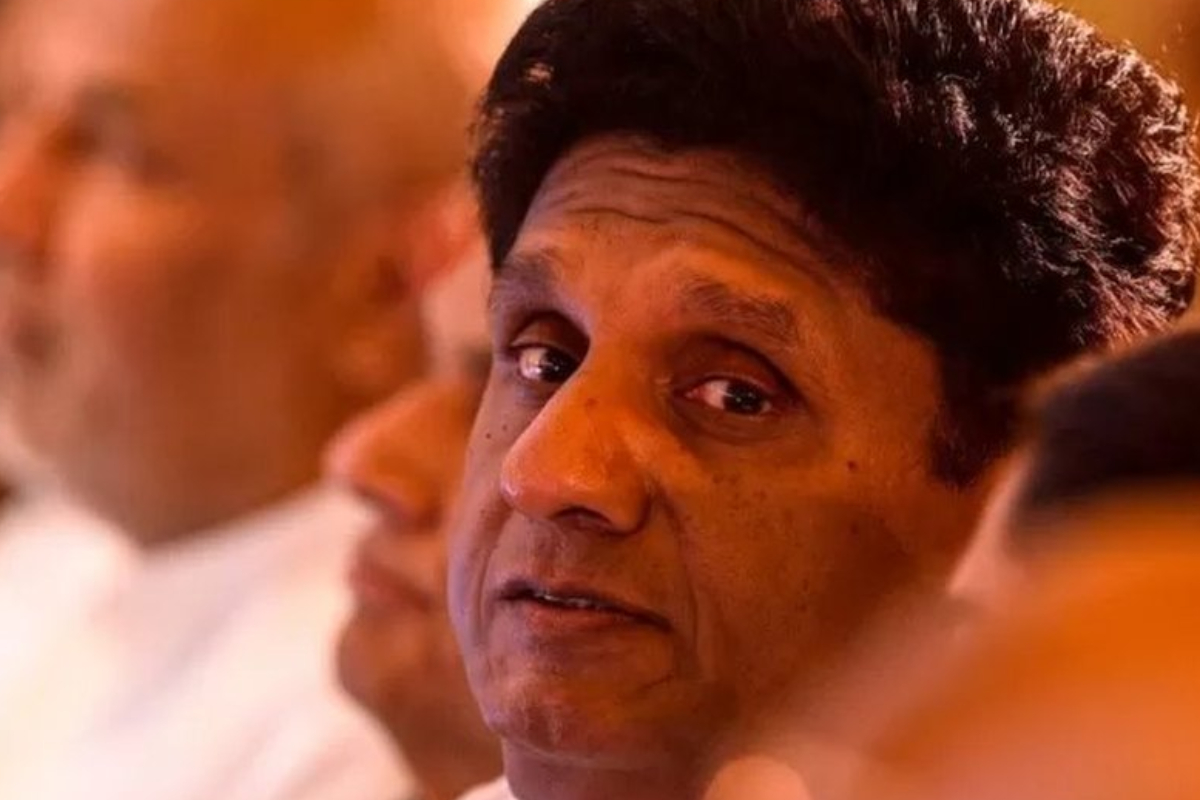
Another debate regarding Sri Lanka’s poverty is the updating of data. Leader of Opposition Sajith Premadasa has criticized the use of old survey data for some key information including household income and expenditure, poverty and food consumption. He pointed out that some sections of the Sri Lankan socio-economic data published in 2026 are based on data from 2016 to 2019.
Thus recent household income, expenditure, employment and consumption data are essential to assess Sri Lanka’s real living standards in the future. How people are living in the current economic situation cannot be understood only by surveys from several years ago.
All in all, looking at the statement “Poverty in Sri Lanka has risen to 65 percent” without context can lead to misunderstanding. 65.4 percent is a projection of a specific international poverty line for 2026. At the same time, it is also true that poverty in Sri Lanka is still higher than it was before the crisis.
So in the next step the government should focus not only on statistics. What matters is whether economic growth translates into income and employment for ordinary households. A lasting solution to Sri Lanka’s poverty problem can only be created if policies are designed to ensure that the benefits of development reach both urban and rural areas equally.