

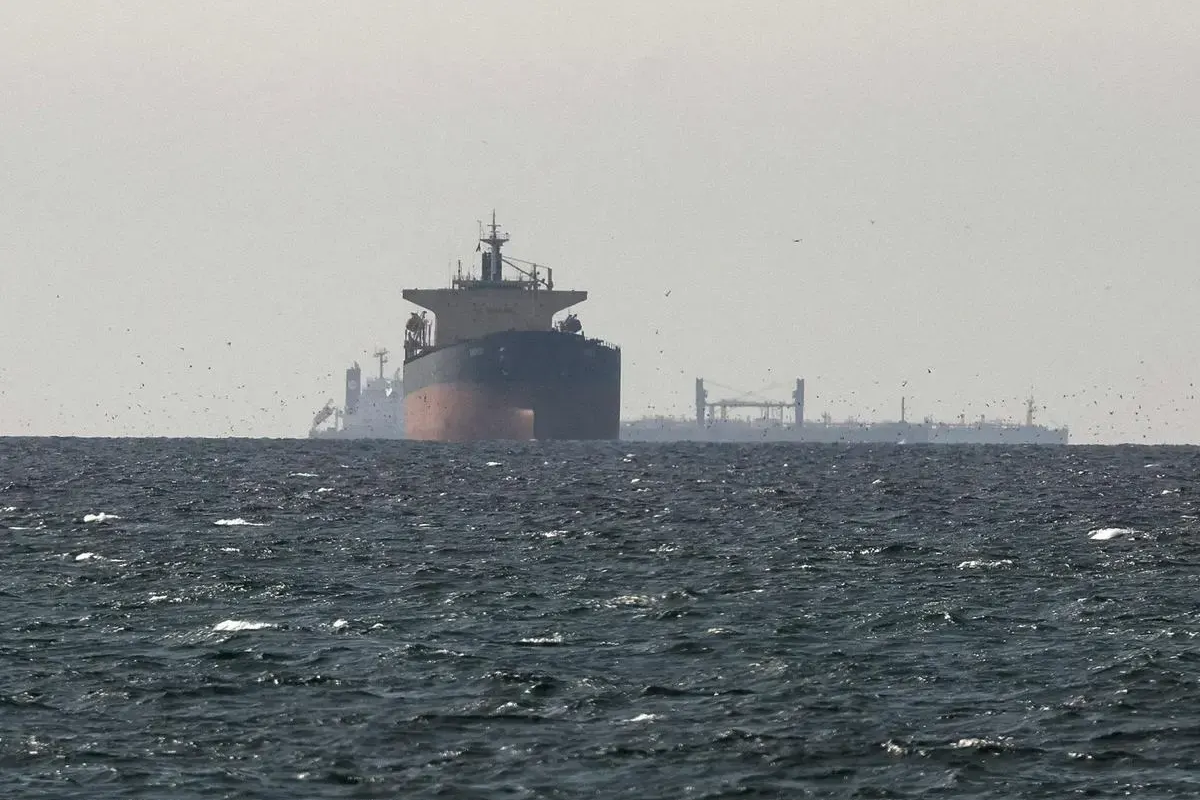
A new controversy has arisen around the Iranian oil tankers that are resting in international waters near the Sri Lankan waters. While there were reports that Sri Lankan companies that provide essential services including food and fuel to these ships may be subject to US sanctions, the Ministry of External Affairs of Sri Lanka has given an explanation in this regard.
Media Spokesperson and Director General of the Ministry of External Affairs, Tushara Rodrigo, said that the US’s secondary sanctions policy is not an action aimed at Sri Lanka alone. He also mentioned that this is a part of the policy of the United States which is generally implemented in different countries of the world.
The clarification comes in the wake of reports in international media that the US embassy has warned Sri Lankan authorities about services linked to Iranian vessels.
Iranian ships docked near Sri Lanka
Reports suggest that several Iranian oil tankers are currently anchored about 15 nautical miles off the southwest coast of Sri Lanka. Some of these vessels are said to have already returned after carrying crude oil from Iran and delivering it to China.
Reports suggest that the ships are now empty and sailors working on them are having difficulty getting essential supplies like food, drinking water and fuel.
The main reason for this situation is the economic sanctions of the United States on Iran. There are fears that additional measures may be taken against companies that directly or indirectly provide services to vessels subject to US sanctions.
According to reports, the US Embassy in Colombo warned the Sri Lankan government about this issue last August. Local companies that provide food, fuel or other services to embargoed ships have been warned that they may face US secondary sanctions, known as ‘Secondary Sanctions’.
Following this, it is said that Sri Lankan port authorities and private shipping companies are also acting very carefully. It is also reported that the provision of services to certain vessels cannot be taken without government approval.
US warning and Sri Lankan government’s statement
According to reports on the matter, Sri Lankan companies have been warned of the risk of coming under US sanctions by providing services to Iranian ships docked near Sri Lankan waters.
However, the Ministry of External Affairs did not see this as a personal US action against Sri Lanka. According to the Ministry’s Spokesperson Tushara Rodrigo, ‘Secondary Sanctions’ is not a measure that targets a specific country. It is seen as part of the way the United States implements its sanctions policies globally.
Thus, questions arise as to whether it is correct to view this issue in the general sense of “US going to impose sanctions against Sri Lanka”. Based on the information released so far, the main focus is on the sanctions that may be faced by companies providing services to certain Iranian ships.
Meanwhile, the prolonged stay of such vessels near Sri Lanka’s main sea trade routes has also created new challenges for the country’s maritime administration.
According to news reports, the US Embassy has also conducted an awareness training for Sri Lankan officials regarding the sanctions. It is reported that a three-day training was held in September in which more than 40 Sri Lankan officers participated. The U.S. Embassy said it included identifying suspicious activity by vessels, identifying methods of circumventing sanctions, and coordinating between various government agencies.
Concerns have arisen over the condition of seafarers
Another major aspect of the issue has been concerns over the status of seafarers working on ships.
Even though the ships are close to the Sri Lankan coast, they are reportedly having problems getting essential supplies such as food, drinking water and fuel due to disruptions in the provision of services. In particular, there have been reports that sailors on some ships have requested food items through shipping agents.
Meanwhile, international laws, US sanctions and Sri Lankan domestic regulations have to be considered separately in relation to providing services to ships in international waters.
Since Sri Lanka’s ports play an important role in international shipping, it is important to check the owner, flag country, nature of the cargo and whether there are any international restrictions on the ship while servicing any vessel.
For the same reason, Sri Lankan officials are reported to have been given information and training on sanctions from the US side. According to information released by the US Embassy, one of the objectives of this cooperation is to prevent the use of Sri Lanka’s maritime trade routes for illegal activities.
On the other hand, the Sri Lankan Ministry of Foreign Affairs’ explanation emphasized that the current issue should not be seen as a direct US sanction against Sri Lanka. Therefore, it is necessary to distinguish between the risk faced by companies providing services to Iranian vessels and the information that private sanctions will be imposed against the Sri Lankan government.
At present, there is no clear decision on how the situation with the Iranian ships will proceed. The terms of service to ships, the impact of the US sanctions and the next steps of the Sri Lankan government are the key factors that could determine the continuation of this issue.