

In Sri Lanka, complete digitization measures are being accelerated to further modernize government services. Efforts are being made to reduce the need for citizens to go directly to government offices to obtain various services and provide those services through a single digital framework.
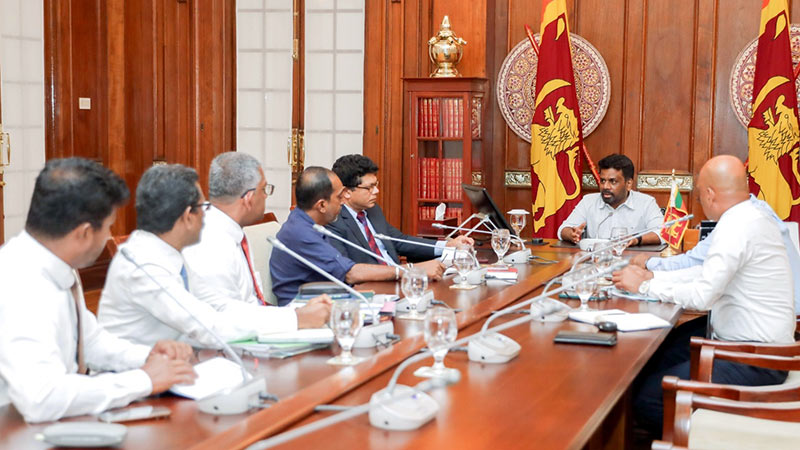
The government has focused on creating an integrated national digital framework that can be inter-connected and interoperable, rather than the various computer systems used by government agencies separately. Important instructions have also been given in the progress review meeting chaired by President Anurakumara Dissanayake regarding the measures for this.
It is not enough to simply digitize many of the processes found in government services. It is also important to bring information and services that are separate in different organizations into a single structure. This will reduce the need for the public to provide the same information to multiple government agencies over and over again.
Currently, citizens have to visit specific offices to avail many government services. Many activities like submitting applications, providing documents, paying fees, obtaining permissions etc. take time. Facilitating more of these through the Internet and digital platforms will make a direct difference to the public.
Digital identity, national data exchange, single portal for government services and digital payment systems are among the government’s current initiatives. The Ministry of Digital Economy has also identified developing digital services that are secure and easily accessible to the public as a key priority.
Divisional Secretariat services are also going digital
Divisional Secretariats occupy an important place in the government’s digitization programme. In many parts of the country, citizens approach the divisional secretariats for their daily needs. It includes work related to birth, residence, social welfare, permits and various administrative services.
In order to integrate these services digitally, steps have been taken to implement the Divisional Secretariat Digitization Project in one district as a model project with complete facilities. Later, the plan to expand it across the country is also being carried out.
Some of the digital applications already piloted in Polonnaruwa district have also been taken into consideration in these activities. Digital systems have been used in tasks like paddy procurement and disaster relief distribution. Based on such experiences, more government services are planned to be merged into one structure.
Consolidation of administrative network
Consolidation of administrative network from divisional secretariat level to district secretariat is also a part of this plan. This is expected to create an environment where the information in one office can be safely used by another office at the time of need.
Some of the services provided by the local bodies will also be digitally connected. This includes services like payment of property tax, rent for commercial establishments, utility charges, reservation of public places, issuance of various permits and registration of public grievances.
Meanwhile, the GovHR platform for digitizing HR management of civil servants from appointment to retirement has also been mentioned as part of this transformation. Through this, there will be an opportunity to organize and manage the HR information of government institutions.
Digital identity system is seen as another important aspect of digitization. A plan to introduce a digital identity card in Sri Lanka is already underway. It is also reported that efforts are underway to start the initial digital identity issuance process by the end of this year under the current plan. Work towards a complete national system is progressing in phases.
As government services go digital, so does security. As the public’s personal information, identity information and financial data are stored on Internet systems, there is a need for structures to manage them securely. Secure infrastructure, privacy protection and reliable service delivery are also mentioned in the government’s digital policy.
Meanwhile, the Cabinet has also given permission to set up separate Digital Transformation Units to coordinate digital transformation in government institutions. These units will be created to coordinate digital transformation activities in every organization and focus on issues such as data, artificial intelligence, cyber security and integration of various systems.
Sri Lanka’s digitization initiatives can gradually transform the daily lives of citizens. It is expected to reduce the number of visits to government offices, save time in accessing services and facilitate the exchange of information between government agencies.
However, the mere availability of a service online does not constitute a complete success of digital transformation. That service should be easily accessible to all. People living in areas with limited internet access should not be neglected either. Likewise, it is necessary to provide necessary assistance to the elderly and those who have difficulty using digital technology.
Therefore, as steps are taken to fully digitize government services, it is important to create technical facilities and provide clear guidelines to the public to use them. If these works are carried out in a planned manner, there may be a significant change in the way government services are accessed in the future.