

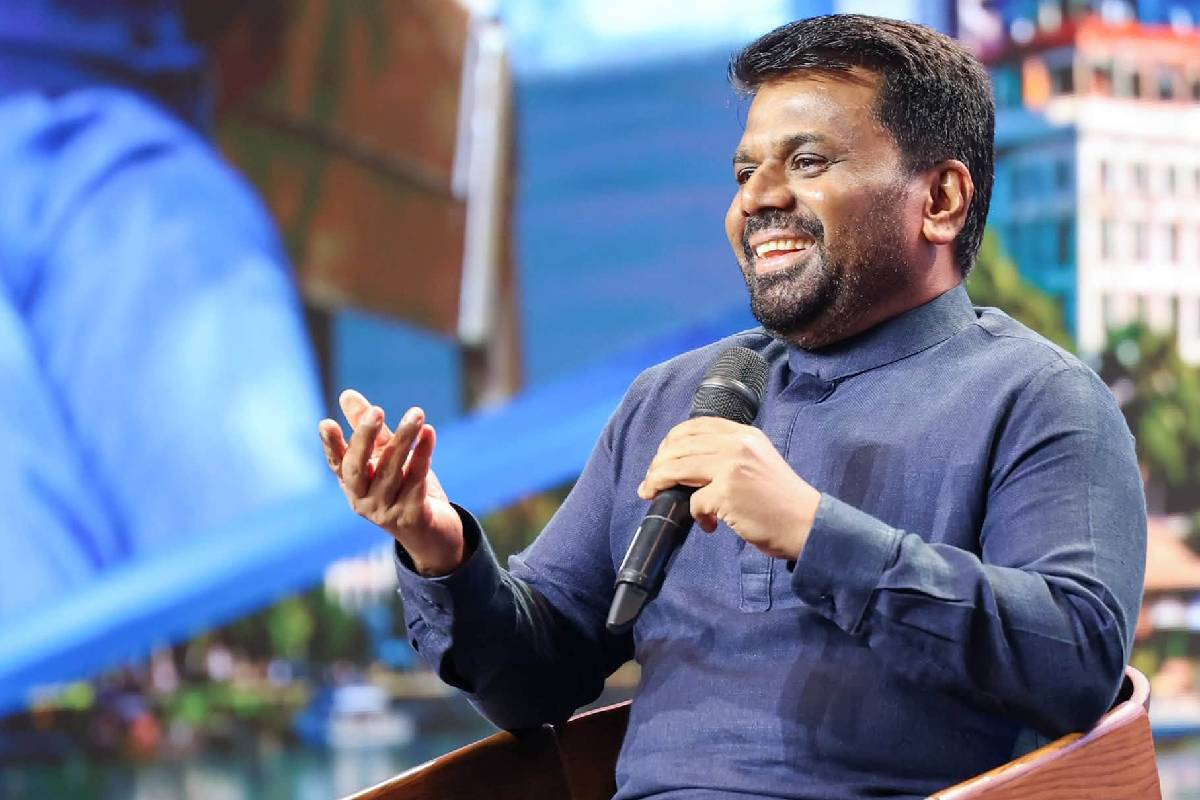
President Anurakumara Dissanayake has said that the government has not ruled out the possibility of joining another agreement with the International Monetary Fund (IMF) even after the completion of Sri Lanka’s current economic programme. He also mentioned that the government is exploring ways to safeguard the country’s economic stability and promote the next phase of development.
The President said this while addressing a discussion organized by the Sri Lanka Chamber of Commerce. He explained that the focus is on whether a new plan is necessary to take the country’s economy on a path of growth in the future while continuing to protect the progress achieved under the current economic programme.
In this context, as the current program with the International Monetary Fund draws to a close, discussions regarding Sri Lanka’s future economic policies have gained importance. Before a final decision on the new deal is taken, the country’s financial position, foreign exchange reserves and the international economic environment need to be assessed.
The Ministry of Finance and the Central Bank are consulting on the new agreement
The President said that the Finance Ministry and Central Bank of Sri Lanka’s top economic officials are continuing to discuss the format of the new program that can be implemented after the completion of the current International Monetary Fund program.
In considering whether to negotiate a new deal, the main objective is expected to be to preserve the economic stability achieved so far. At the same time, attention may also be given to measures necessary to expand the country’s economic growth and encourage investments.
However, a final decision to enter into a new agreement with the International Monetary Fund is yet to be announced. As the current program is about six months away from completion, the President mentioned that future actions will be decided based on the prevailing economic situation.
How strong Sri Lanka’s foreign exchange reserves are will also play a major role in this decision. Having sufficient foreign currency to import fuel, food and essential commodities from abroad is essential for the economic security of the country.
Therefore, the discussions regarding the new deal will not be just about getting credit. Aspects like managing external debt, increasing government revenue and sustaining economic growth will also gain importance in the future.
Middle East Conflicts and the Cost of Fuel Imports: What Are People’s Expectations?
Among the external factors that could affect Sri Lanka’s future economic plans are the ongoing conflicts in the Middle East. The President has warned that if these conflicts continue, the amount Sri Lanka will have to spend on fuel imports may increase.
In 2025, Sri Lanka’s fuel import expenditure was 4.4 billion US dollars, and in 2026 it could reach about 6 billion US dollars, he said.
Thus, if expenditure increases, the country’s demand for foreign currency will also increase. This may have an impact on fuel prices, transportation costs and production costs of goods. In particular, rising prices of essential goods may further increase household monthly expenses.
The main expectation among the public in this regard is that the benefits of economic stability should be felt in people’s daily lives. Key issues include controlling inflation, increasing employment, improving incomes and protecting low-income families.
However, it remains to be seen what the terms of another agreement with the IMF would be. Since policies relating to taxes, government expenditure and subsidies may have a direct impact on the lives of the public, there may be an expectation of transparent explanations regarding them.