

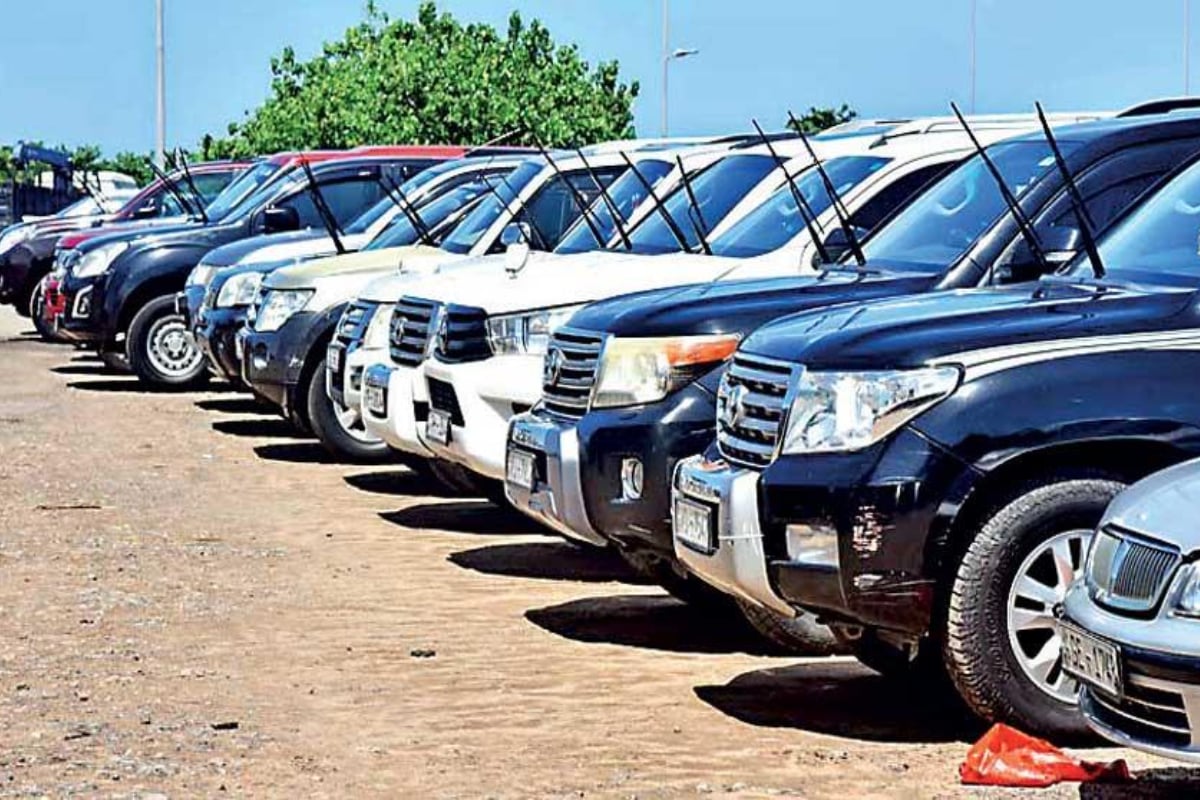
According to a new report of the National Audit Office, there have been irregularities in vehicles worth several crores of rupees belonging to the Ministry of Transport.
It is imperative that vehicles owned by government agencies are properly registered and that information regarding their use and maintenance is clearly maintained. But the report indicates that various defects have been found in the audit investigations carried out in relation to some vehicles under the Ministry of Transport.
In particular, the issue related to the six cab type vehicles imported for the Matara – Beliathta railway project has a prominent place in it. It is also reported that more than two crore rupees were paid as financial tax by the ministry for these vehicles.
Vehicles brought for Matara – Beliath project
Six Cab type vehicles were imported for the work of Matara – Beliathta Railway Project. It is reported that these vehicles were used in activities required for project work.
However, after completion of the project, these vehicles were not handed over to the Ministry of Transport again, according to the report of the National Audit Office.
Instead, audit investigations revealed that they were being used by other parties. It should be clearly recorded to which agency or official department the vehicles purchased or imported using government funds were handed over after completion of the project works.
But questions have been raised regarding the non-return of these six vehicles under the control of the ministry. Also, the ongoing use of the vehicles has drawn attention as more than two crore rupees have been paid as tax for them.
Since government assets are maintained out of public money, transparency and accountability in their use is critical. It is against this background that the information mentioned in the audit report becomes important.
40 vehicles do not have government number plates
Along with this, the audit office also pointed out another important issue regarding 40 vehicles belonging to the highways department.
All vehicles owned by the government must bear the government emblem. Through this, it can be identified that the particular vehicle belongs to a government agency. Such markings may also help prevent misuse of government vehicles for personal use.
But a report by the National Audit Office says that 40 vehicles of the Highways Division do not have government badges on them.
This raises the question of whether administrative procedures were properly followed. Due attention should be paid to non-compliance of basic procedures for identification of government vehicles.
Further, audit investigations also revealed that the ownership of nine vehicles belonging to the ministry had been transferred to other companies without making any legal changes.
Transfer of ownership of vehicles is not an ordinary administrative action. Appropriate documents, permits and legal procedures must be followed. If government assets are transferred to other institutions without doing so, the authorities concerned may have to explain their responsibility.
There is an expectation that thorough investigations should be carried out in these matters and clear information should be disclosed about the state of government assets and their use.
Also deficient in fuel efficiency testing
The audit report also raised questions about the fuel consumption of the vehicles of the Highways Division under the Ministry of Transport.
It has been mentioned in the report that 36 vehicles owned by the highways department were not tested for fuel efficiency last year.
It is very important that the fuel consumption of government vehicles is properly monitored. Fuel costs can be significant especially in government agencies where a large number of vehicles are used. Unnecessary costs can be controlled by conducting regular tests on vehicle performance and fuel consumption.
But the fact that such tests were not carried out in 36 vehicles reveals a deficiency in administrative monitoring.
All in all, the issues pointed out by the National Audit Office regarding the vehicles of the Ministry of Transport have made it necessary to pay attention to the management of government assets. These include six vehicles not being handed over to the ministry and being used by other parties, 40 vehicles not having government plates, nine vehicles being transferred to other companies without legal process and fuel efficiency tests not being carried out on 36 vehicles.
It has become necessary for the concerned authorities to take appropriate action regarding these deficiencies and properly maintain records regarding the current condition, ownership and use of government vehicles. Government assets should be protected and necessary transparency to the public regarding their use should be ensured.